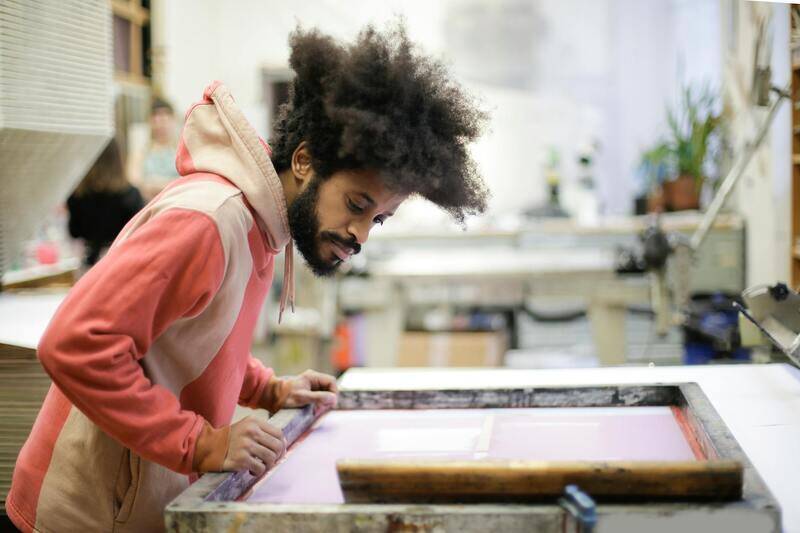
The company on the invoice may not own a press
When you place a print order, you are buying from one of three quite different kinds of business, and the website rarely tells you which. Some own presses and print your job themselves. Some own nothing and place your job with a production partner. Some do both, printing what suits their equipment and sending out the rest.
None of these is inherently better. A good broker beats a mediocre printer, and a printer whose equipment is wrong for your job will produce a worse result than someone who places it correctly elsewhere. What matters is knowing which model you are dealing with, because it changes who controls quality, how problems get fixed and where the flexibility lies.
The three models
The printer
Owns presses and finishing equipment. Your job is produced on their floor by their staff. They have direct control over scheduling, quality and rework, and they know their machines intimately. The limit is that every printer's equipment suits some jobs and not others, and the temptation to fit a job onto the available press is real.
The broker or print manager
Owns no production equipment. They take your specification, place it with a suitable supplier and manage the job. Their value is in matching the job to the right production route, in buying power, and in taking the management effort off your hands. The limit is that they are one step removed from the floor, so problems take longer to diagnose.
The hybrid
Most established printers are actually this. They produce what fits their equipment and outsource large-format, speciality substrates, unusual finishing or very long runs. This is normal and sensible. It becomes a problem only when it is hidden, and you discover after a problem that the item was made three suppliers away.
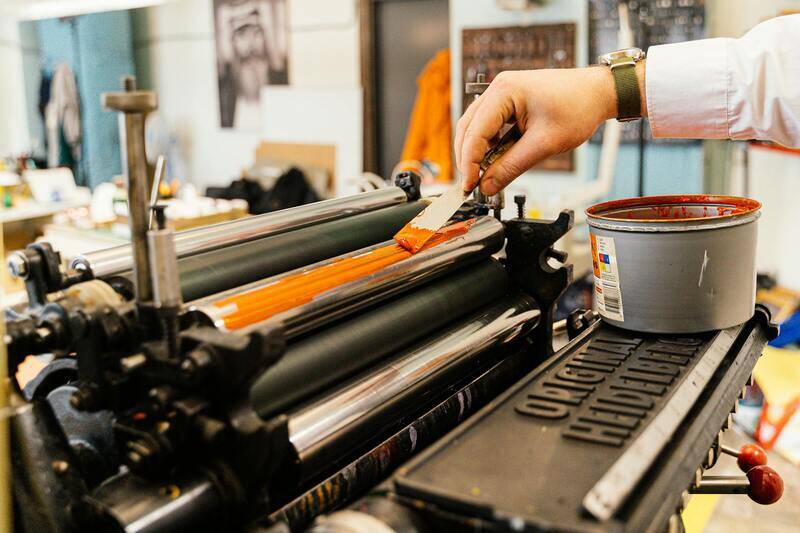
Why it matters to you
| Situation | Direct printer | Broker or manager |
|---|---|---|
| Turnaround on a rush job | can move their own schedule | depends on partner availability |
| Range of products | limited to their equipment | broad, sourced to fit |
| Attending a press check | possible on site | usually not practical |
| Diagnosing a fault | immediate, in house | relayed through a partner |
| Consistency across a range | strong within their capability | depends on how many partners are used |
| Handling a complex multi-item project | may need to outsource parts | this is the core strength |
The pattern is fairly clear. For a single item that sits squarely within a printer's capability, going direct is usually simplest. For a project spanning several products, substrates and finishing processes, someone managing it is worth what they cost.
How to find out which you are dealing with
You do not need to interrogate anyone. A few ordinary questions reveal the model quickly, and a reputable supplier answers them without hesitation.
- Do you produce this in house? The most direct question, and the answers are informative either way.
- What equipment would this run on? A printer will name a press type. A broker will say they place it with a partner.
- Can I visit or see a press check? Not because you necessarily will, but the answer tells you where production sits.
- Who handles a reprint if something goes wrong? This establishes the chain before you need it.
- What is your typical lead time and what drives it? A direct printer talks about their schedule. A manager talks about sourcing.
Evasiveness on these is itself the answer. A supplier who will not say whether they print your job is not one to rely on for anything complicated.
When a broker is the better choice
There are situations where a managed route genuinely outperforms going direct.
When a project spans several products with different production requirements, one point of contact is worth a great deal. When your internal team has no print expertise, buying that expertise is cheaper than acquiring it. When volumes are large enough that competitive sourcing produces real savings, someone whose job is to source will find them. And when you need consistency across many locations, a manager who holds the specification centrally can deliver it more reliably than a dozen local suppliers each doing their reasonable best.
The related decision between an online portal and a local shop follows similar logic, and is set out in online print portal or local print shop.
When going direct is better
Equally, there are cases where the shortest chain wins. Repeat orders of a single stable item benefit from a printer who knows the job. Colour-critical work benefits from being able to attend a press check. Genuinely urgent jobs benefit from direct access to a schedule. And very simple items rarely need managing at all.
There is also a cost consideration. Management adds value and it also adds a margin. On a straightforward job that any competent printer can produce, that margin buys you less than it does on a complex project.
Comparing quotes across models
Quotes from a direct printer and from a manager are not always comparing the same thing, and the differences are easy to miss.
Check what is included: artwork checking, proofing, delivery, storage, and how many rounds of amendment are covered. Check the stock specification is identical, because a substitute paper at a similar weight can behave differently. Check the tolerances quoted, if any. And check what happens on a reprint, since that clause is where the real difference in risk sits.
Most importantly, compare like with like on quantity, because price breaks fall at different points depending on the production route. The mechanics are covered in comparing print quotes and in minimum order quantities and price breaks explained.
Questions of quality and accountability
A common worry about managed print is that quality suffers because nobody is watching. In practice the opposite is often true, because a manager who places a lot of work has leverage that a single small customer does not. A supplier who wants the next fifty jobs will take a reprint seriously.
What does change is the speed of diagnosis. When something goes wrong on a directly printed job, the person who ran it is in the building. On a managed job, information travels through an extra link. That is a reason to establish the escalation path at the start, not a reason to avoid the model.
Building a supplier list rather than picking one
Organisations tend to look for the supplier, singular, and then feel obliged to send everything to them. A short list of two or three, each suited to different work, usually serves better and costs nothing to maintain.
A sensible shape is one direct printer for your regular items, one managed supplier for projects and specialist work, and one option for genuinely urgent jobs. That way no single job has to be forced through a route that does not fit it, and you keep a comparison point when prices drift.
Keep the list small. Managing many suppliers has its own cost, and the relationship value of being a regular customer is real: a supplier who sees you every month will move things for you in a way that one who sees you once a year will not. Two or three is usually the point where flexibility and relationship both hold.
Review it every year or two rather than every quarter. Constant retendering to save small amounts erodes exactly the goodwill you will want the day something goes wrong before an important deadline.
A practical approach
- Decide what the job actually needs. Single item or project, standard or specialist, urgent or scheduled.
- Ask the model question early. Before the quote, not after a problem.
- Match the route to the job. Direct for simple and repeat, managed for complex and multi-item.
- Do not assume one supplier for everything. Different jobs can sensibly go different ways.
- Establish the reprint path. Ask who fixes what before you need to know.
- Judge on outcomes. Delivered on time, to specification, with problems handled well. The business model is a means, not the measure.
The choice between production technologies is a separate question that cuts across all of this, and it is covered in digital vs offset printing in Singapore.
How we work
We tell clients plainly what we produce ourselves and what we place with production partners, because the alternative creates unpleasant surprises later. Where a job would be better made elsewhere, we say so and manage it rather than forcing it onto equipment that is not quite right. Where it suits our own capability, it stays in house and moves faster.
For multi-item projects we hold the specification centrally so the whole set stays consistent regardless of where individual pieces are produced. You can see the range under custom online printing and across general printing. To discuss which route suits a particular job, use our contact page, and there is more about how we operate on the about page.
The short version
You are buying from a printer, a broker or a hybrid, and most established suppliers are the third. Ask directly whether a job is produced in house, what equipment it runs on, and who handles a reprint. Go direct for simple, repeat and colour-critical work where access to the press matters. Use a managed route for multi-item projects, for specialist substrates and where you need consistency across locations without holding the expertise yourself. When comparing quotes, check inclusions, stock, tolerances and reprint terms rather than only the number. And judge suppliers on delivered outcomes rather than on which category they fall into.