Two ways to make paper survive
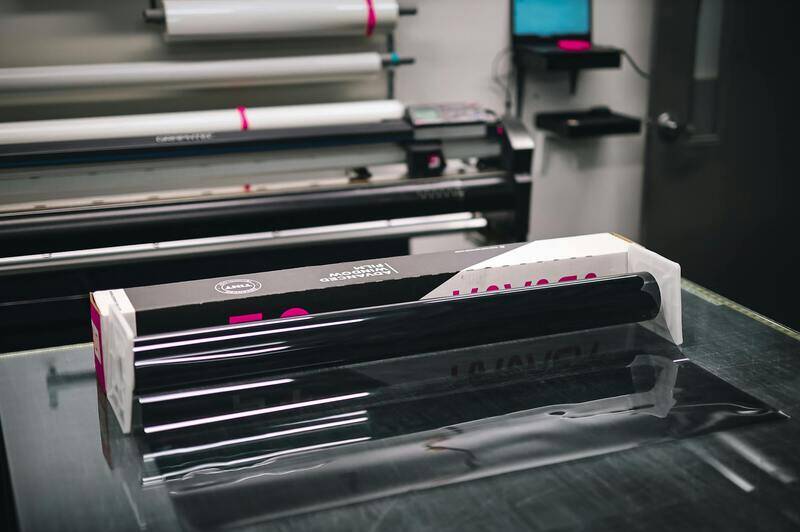
Some printed items have a hard life. Restaurant menus get wiped with a wet cloth twenty times a day. Swing tags on plants sit in a nursery under a sprinkler. Safety cards live in a factory, instruction sheets are taped to machines, and event signage goes up outdoors in Singapore's rain and humidity. Ordinary paper fails quickly in all of these. There are two common ways to make print survive: laminate ordinary paper with a plastic film, or print directly on synthetic paper, a plastic sheet that looks and handles like paper.
Both work. They differ in cost, in how they fail, in what finishing is possible, and in how they feel in the hand. This guide compares them so you can choose per job and read a quote with confidence.
What each option actually is
Laminated paper
A normal printed sheet (often 150 to 300 gsm art card) is sealed with a thin plastic film on one or both sides. For durability you need lamination on both sides; one-side lamination is mainly a finish for looks and scuff resistance. There are two very different kinds:
- Thin film lamination (around 25 to 30 micron), applied by the printer across the full sheet before trimming. The edges of the paper are exposed after cutting, so water can still get in at the edges.
- Pouch or encapsulation lamination (typically 80 to 250 micron), where the item is sealed in a thicker plastic with a clear border around it. Fully waterproof, rigid, and more obviously plastic.
Synthetic paper
Synthetic paper is made from polypropylene or polyester film engineered to take printing inks and toner. It is waterproof all the way through, tear resistant and grease resistant. It is sold by thickness in microns (commonly 130 to 350 micron). Brands vary, and not every synthetic sheet runs on every press, which is why printers usually stock one or two specific types.
Side-by-side comparison
| Factor | Thin-film laminated paper | Encapsulated paper | Synthetic paper |
|---|---|---|---|
| Water resistance | Good on the surface, edges can absorb water | Fully waterproof | Fully waterproof, including cut edges |
| Tear resistance | Moderate | High | Very high |
| Feel | Like thick card | Rigid, plastic border | Like smooth paper, slightly slippery |
| Writable | Matte film takes some pens | Only with markers | Pencil and many pens on uncoated grades |
| Folding | Cracks along folds unless scored | Not practical | Folds well |
| Recycling | Mixed material, difficult | Mixed material, difficult | Single plastic, recyclable where accepted |
| Typical cost for short runs | Lowest | Higher, extra hand work | Often between the two |
Costs vary by supplier and quantity, so treat the last row as a general pattern. Ask for both options quoted on the same quantity if you are unsure.
How each one fails
Understanding the failure mode is often more useful than the headline durability claim.
- Thin-film laminated paper usually fails at the edges and corners. In a humid kitchen or outdoors, moisture enters the exposed paper edge, the film begins to lift, and the card swells. On folded items, the film cracks along the fold after repeated opening.
- Encapsulated paper rarely fails from water. It fails when the border is trimmed too close (breaking the seal) or when the item is bent repeatedly and the plastic creases permanently.
- Synthetic paper can scratch on the printed surface if the ink was not properly cured or the grade is uncoated, and some low-grade sheets curl in heat. It does not delaminate because there is nothing to delaminate.
Which to use for common jobs
Menus
For single-page menus that are wiped daily, synthetic paper at 250 to 350 micron is a strong choice: no edges to lift, folds cleanly for bi-fold formats, and replaced cheaply when prices change. For premium menus where a card feel matters, laminated heavy card works if you accept replacing it more often. Encapsulation suits kids' menus and counter cards that get rough treatment.
Tags and labels on products
Plant tags, luggage tags and swing tags that go outdoors or into cold storage are nearly always synthetic. The hole for the string does not tear out, and there is no paper core for water to reach.
Instruction cards and safety signs
For factory, lab and workshop use, synthetic or encapsulated. Choose synthetic if staff need to write on it; encapsulation if it is only read.
Short-lived signs and event material
For an outdoor event lasting a day or two, thin-film laminated card is usually enough and costs least. Our poster printing options list rigid alternatives for longer outdoor use.
Business cards and name cards
Synthetic cards are a niche option for people who hand out cards on boats, construction sites or at outdoor events. Most business cards are better served by laminated card; see our page on business card printing.
Comparing cost over the life of the item
The unit price on a quote is only half of the comparison. What matters for a menu or a sign is the cost per month of use. Take a restaurant that prints 40 menus. If laminated card menus look tired after three months and synthetic ones last a year, the synthetic set can work out cheaper even at a higher unit price, and the restaurant avoids the staff time of replacing menus and the risk of guests being handed a peeling one. The reverse is also true. A menu that changes every month with seasonal dishes never reaches the end of its physical life, so paying for the most durable material makes little sense; thin-film lamination on card is the economical choice there.
A simple way to decide is to estimate two numbers before asking for quotes: how often the content changes, and how long the item would last physically in each material. Order the material whose lifespan is closest to the content's lifespan. Our guide on how many copies to print applies the same thinking to quantity.
Questions to ask before you order
- Is the quote for one-side or two-side lamination? Only two-side lamination protects against moisture.
- What thickness of synthetic paper is quoted, and can I see a sample of that exact grade printed?
- Will the synthetic sheet take the pens or markers my staff will use?
- For folded items, will the job be creased before folding?
- Is the printing process suited to synthetic paper? Some presses need specific grades, and using the wrong one can lead to poor ink adhesion.
Paper choices also affect how double-sided print looks. Our article on paper brightness, opacity and show-through covers this for standard stocks, and the same checks apply to lighter synthetic grades.
Durable printing from us
We print on synthetic paper, laminated card and encapsulated sheets, and we will recommend one based on where your item will be used, how long it needs to last and your budget. Tell us the job, the environment and the quantity, and we can quote the options side by side and send printed samples of the stock before you decide. Menus, tags, instruction cards and signage are all produced through our custom printing service. To get a comparison quote, send your artwork and a short description of where the print will live through our contact page.