Why an unusual size costs more than it looks like it should
A designer proposes a brochure at 200 by 200 millimetres. It looks good, it stands out on a table, and it is only slightly different from a standard square format. The quote comes back noticeably higher than expected, and nobody can immediately explain why a few millimetres should matter.
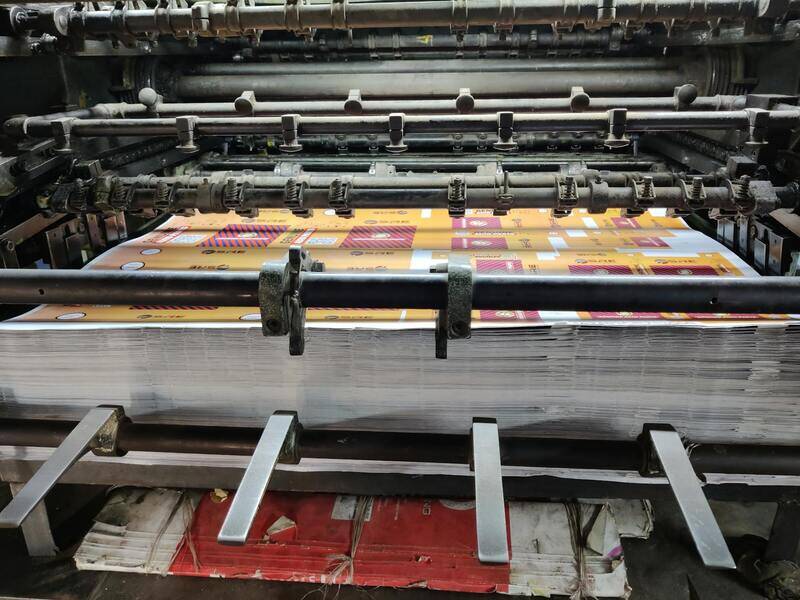
The explanation is straightforward once you know how print is produced. Nothing is printed one item at a time. Items are arranged on a large parent sheet, printed together and then cut apart. How many fit on that sheet determines almost everything about the cost. A size that fits neatly is cheap. A size that leaves a strip of unusable paper around the edge is not.
The parent sheet and how your job sits on it
Presses run standard sheet sizes, and paper is manufactured in sizes designed to divide down into common finished formats. Arranging items on the sheet is called imposition, and the aim is to fill it with as little waste as possible.
Standard formats exist precisely because they divide cleanly. Halving a sheet of an A-series size gives the next size down with the same proportions, all the way down. That is not a coincidence; the series was designed that way. As a result, standard sizes fill a parent sheet efficiently, and the paper you buy mostly ends up as product.
An unusual size does not divide cleanly. You might fit six per sheet where a standard size fits eight, which means each item carries a third more paper cost. Worse, some odd sizes drop you to fewer items per sheet for a change of a few millimetres, producing a cost jump that looks completely disproportionate to the design change that caused it.
Where the extra cost comes from
- Paper waste. The direct and largest cost. Unusable margin is paid for and thrown away.
- More sheets for the same quantity. Fewer items per sheet means more press impressions for the same delivery.
- Extra cutting. Odd formats often need additional guillotine passes, each one a setup and a handling step.
- Non-standard envelopes. If it has to be posted, a custom size may need a custom envelope, which is a whole separate production problem.
- Postal banding. Postal pricing has size and weight thresholds. A format just over one of them costs more to send on every single item.
- Finishing setup. Folders, binders and laminators are set for common formats. Unusual sizes take longer to set and sometimes cannot be run at all.
- Storage and display. Racks, shelves and display stands are built for standard sizes. An item that does not fit any of them has a practical problem after printing.
When a custom size is worth it
None of this means never use a custom format. It means knowing what you are buying.
A distinctive size is a genuine design asset. A brochure that does not look like every other brochure gets picked up. A square format reads differently from a portrait one. A slim vertical leaflet fits a pocket where a standard one does not. If the format is doing real work for the piece, the extra cost may be entirely justified.
The mistake is paying the premium by accident. A size chosen because it looked right on screen, with no awareness that it costs a third more and needs a bespoke envelope, is a bad trade. A size chosen deliberately, with the cost understood and accepted, is a design decision.
How to get most of the benefit for less
- Ask before finalising. Send two or three candidate sizes to your printer and ask which sits best on the sheet. The answer often costs nothing to act on at that stage.
- Accept a small adjustment. Moving a dimension by a few millimetres can restore an efficient layout while looking identical to anyone who is not measuring.
- Change one dimension only. A standard width with a shorter height often trims from a standard sheet with little waste and still looks distinctive.
- Check envelope availability first. If the item is being mailed, confirm a stock envelope exists before committing to the format.
- Check postal thresholds. Confirm the finished item sits comfortably inside a band rather than just over the line.
- Consider the display context. If it goes in a rack, on a shelf or in a folder, measure that first.
The first point does most of the work. Printers know their sheet sizes and will usually tell you within a few minutes which of your options is cheapest to produce.
A rough comparison
| Format choice | Sheet efficiency | Envelope | Typical cost effect |
|---|---|---|---|
| Standard series size | high | stock available | baseline |
| Standard size, shortened | usually good | often still fits | small increase |
| Square format | varies by dimension | often needs custom | moderate increase |
| Fully custom dimensions | often poor | custom likely | significant increase |
| Oversized format | depends on parent sheet | specialist | can be large |
These are directional rather than precise, because the answer depends on the specific dimensions and the specific press. That is exactly why asking beforehand is worth the five minutes.
Folded items add another constraint
For anything that folds, the flat size matters as much as the finished size. A folded leaflet has to be printed flat, so the flat dimension is what sits on the sheet. It is common for a finished size that seems modest to have a flat size that no longer fits efficiently.
Fold type matters too. A simple half fold, a roll fold and a concertina fold have different panel width requirements, because panels that tuck inside must be slightly narrower to fit. Get that wrong and the fold bulges or the edge does not align. Confirm panel dimensions with the printer rather than dividing the flat width equally, which is the most common error in folded artwork.
Bound items and page counts
Booklets bring a second efficiency question alongside size: page count. Pages are produced in groups determined by how the sheet folds, so page counts have to be multiples of a certain number depending on the binding method. A booklet with an awkward page count either gets padded with blank pages or forces an inefficient imposition.
Plan content to fit the available counts rather than designing freely and discovering the constraint afterwards. Two extra pages of useful content usually beats two blank ones, and either beats a redesign at the quoting stage. Related considerations on quantity and unit cost are covered in how many should you print.
Trim tolerance and why margins matter more at odd sizes
Cutting is mechanical and carries a small tolerance, typically well under a millimetre but never zero. On a standard format cut from a well-filled sheet, that variation is spread evenly and nobody notices. On an odd size trimmed from an awkward layout with extra passes, the variation has more chances to accumulate.
The practical consequence is that unusual formats need slightly more generous safe margins than you might use on a standard job. Content placed close to the edge on a design that requires three cutting passes is more likely to end up visibly off-centre on some copies than the same design on a single-pass standard format.
Bleed matters for the same reason. Any background colour or image that runs to the edge must extend beyond the trim line, and on shaped or unusual formats that allowance should be applied on every edge without exception. A white sliver along one side of a run is almost always a bleed that was applied on three edges and forgotten on the fourth.
Size interacts with stock and weight
A larger format on a heavier stock crosses postal weight bands faster, and a large item on a light stock feels flimsy in the hand. These two decisions should be made together rather than separately, since either one alone can undermine the other. Guidance on weight selection is in paper weight explained, and stock surface in coated or uncoated.
The production method matters as well, since digital and offset presses have different sheet sizes and different economics. That comparison is set out in digital vs offset printing in Singapore.
How we handle format questions
When a job comes to us with an unusual size, we quote it as asked and we also tell you what a small adjustment would save. Often the answer is that a change of a few millimetres, invisible in the finished piece, moves the job to a better layout on the sheet. Sometimes the answer is that the custom format is worth the money, and we say that too.
For mailed items we check envelope availability and postal thresholds before the run rather than after, because those are the two constraints that cause the most expensive late changes. You can see the options under digital printing services and across general printing. Quote inclusions are explained in comparing print quotes. To check a format before you commit, use our contact page, and there is more about us on the about page.
The short version
Print is produced many items to a large sheet, so how well your size divides that sheet drives the cost. Standard formats divide cleanly; unusual ones leave waste you pay for. Extra cost also arrives through additional cutting, custom envelopes, postal bands and finishing setup. Custom sizes are worth it when the format does real work for the piece, and wasteful when chosen without knowing the price. Send candidate sizes to your printer before finalising, accept a few millimetres of adjustment, check envelopes and postal thresholds early, and for folded and bound work confirm flat size, panel widths and page counts before design is signed off.