What a 48-page catalogue costs to print, and where the money goes
A product catalogue, a company magazine, a lookbook or an annual report is the largest print job most companies buy, and the quote for it is the hardest to read. A 48-page A4 catalogue in a run of 2000 can be quoted at figures that differ by half, with both quotes correct for what they describe. The cost of a multi-page job comes from a small set of drivers, and once you can see them you can move the price by changing the spec rather than by pressing the printer. This guide walks through those drivers in the order a printer estimates them: quantity and method, page count and format, paper, cover, binding, finishing, and the things that quietly add 10 percent.
Quantity and print method: the first fork
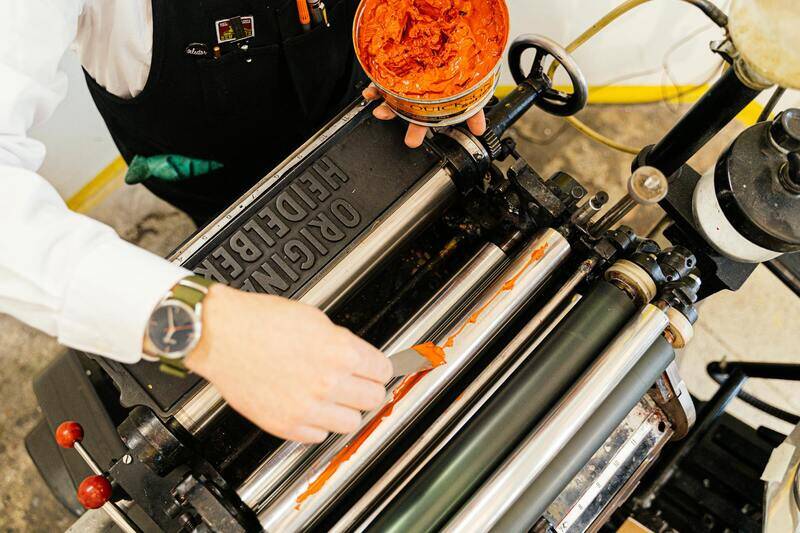
Below roughly 300 to 500 copies, a 48-page catalogue is printed digitally: the cost per copy is nearly flat, and the price is mostly paper and clicks. Above that, offset takes over: there is a fixed set-up cost (plates, make-ready) for each printed section, after which each extra copy is cheap. The crossover depends on the page count, because every 16 pages of offset is another set of plates. Our article on digital versus offset by quantity gives the general rule; for catalogues the practical consequence is that 1000 copies of a 48-page offset job cost perhaps 40 percent more than 500, not double, and 2000 cost perhaps 30 percent more than 1000. Ask for the quote at three quantities and you will see the curve.
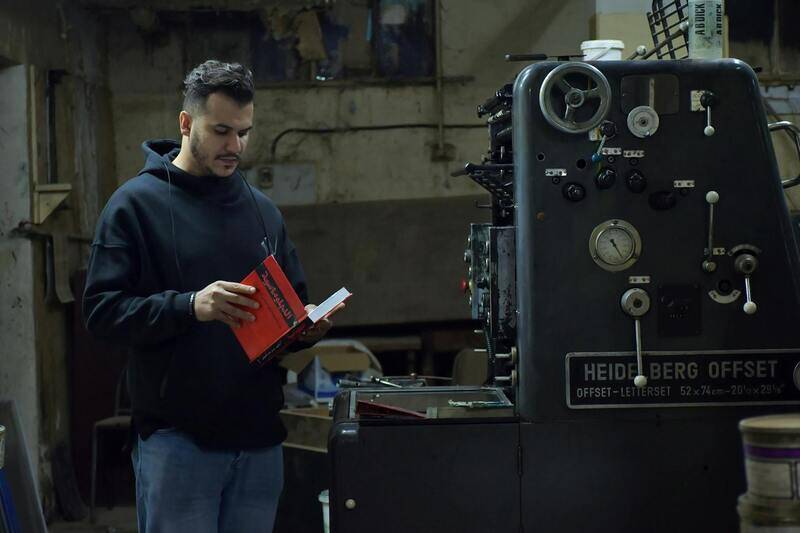
A worked example makes the shape clear. A 48-page A4 catalogue, 130 gsm coated inside, 250 gsm laminated cover, saddle-stitched, 1000 copies: in a typical Singapore offset quote the paper is the largest line, the three inner sections and the cover section are the next, binding and lamination are small, and packing and delivery are smaller still. Move the same job to 2000 copies and the paper line doubles while the section costs barely move, which is why the price per copy falls. Move it to 170 gsm and the paper line grows by a third while everything else stays put.
Page count and format: the multiple-of-16 rule
Offset presses print sections of 8 or 16 pages on a sheet, folded and gathered. A 48-page catalogue is three 16-page sections. A 52-page catalogue is three 16s plus a 4-page section, which costs nearly as much to set up as a 16 and is an awkward extra step in binding. A 56-page is three 16s and an 8. So page counts in multiples of 16 (32, 48, 64, 80) are the efficient ones; 8-page steps are acceptable; 4-page additions are the expensive way to fit two more products in.
Format matters through the sheet. A4 portrait and A5 fit standard sheets with little waste. A square 210 x 210 mm or a slightly-larger-than-A4 format can drop the number of pages per sheet and push the paper cost up by a quarter. If a non-standard format is essential to the design, ask the printer which size close to it fits their sheet best; often 5 mm makes the difference. The trade-offs are described in the note on standard sizes versus custom trim.
Paper: the largest single line
On an offset catalogue the paper is commonly 30 to 45 percent of the price, and it scales with every copy and every page. The choices that move it:
| Inner stock | Feel | Cost effect |
|---|---|---|
| 115 gsm matt or gloss coated | Light, magazine-like, some show-through | Baseline |
| 130 gsm coated | Standard catalogue weight, little show-through | About 10 percent more paper cost than 115 |
| 150 to 170 gsm coated | Substantial; lookbooks and premium catalogues | About 25 to 40 percent more than 115; heavier to post |
| 100 to 120 gsm uncoated | Natural feel; colours softer | Similar to coated per gsm, but photographs need more ink and a check on the proof |
Two things people forget. Weight drives postage: a 48-page A4 on 170 gsm weighs about 300 g with cover; on 115 gsm about 210 g, which can be a whole postage band. And opacity matters more on a catalogue than on a flyer, because every page is double-sided with images; a 115 gsm sheet with a dark photograph on the back of a white product page shows through. The note on opacity and show-through explains what to look for on the paper spec.
Cover, binding and finishing
A separate heavier cover (250 to 300 gsm, usually laminated) adds a small print section plus lamination, but it is what makes the piece feel finished. A self-cover (the cover on the same stock as the inside) saves that and is common for magazines and lighter catalogues. Binding:
- Saddle stitch (stapled through the spine) is the cheapest and works to about 64 pages on 115 gsm, fewer on heavier stock, before the booklet stops closing flat.
- Perfect binding (glued spine) adds a fixed cost per copy and needs at least 40 or so pages to have a spine to glue; it looks like a book and lets you print the title on the spine.
- PUR binding is perfect binding with a stronger glue, for catalogues that will be opened flat and handled for a year.
- Wire-o for a technical catalogue that must lie flat on a bench; costlier and slower.
Finishing on the cover (matt lamination, spot UV, foil) adds a few percent each. Inside-page finishing is rare and expensive; a varnish on the inside pages is an extra pass through the press and is only worth it on heavy-ink lookbooks that will be handled a lot.
The quiet 10 percent
Items that are not in the headline price and appear on the invoice or in the small print:
- Proofs: a full digital proof is usually included; a wet proof on the actual stock is a charge, and worth it once for a catalogue that will be reprinted.
- Overs and unders: the trade allows a percentage variation in quantity, and some printers invoice the overs. Ask for "exact quantity" or "overs not charged".
- Shrink-wrapping in packs, cartons and pallets, and delivery to more than one address.
- Author's corrections after proof approval: a new plate per changed section on offset.
- Data and file fixes: missing fonts, RGB images, a badly imposed PDF. A clean file is the buyer's cheapest saving.
Where to save, in order
- Move the page count to a multiple of 16.
- Fit the format to the sheet.
- Drop the inner stock one step (170 to 150, 150 to 130) and check show-through on a sample.
- Print the whole year's quantity at once and hold stock, if the content will not change.
- Self-cover instead of a separate cover, if the piece is under about 40 pages.
- Only then, discuss the price.
Getting a catalogue quote from us
Send the page count, format, quantities (give us three), the content type (product photography, text-heavy, mixed) and how the catalogue will be distributed, and our booklet and catalogue printing service will return a quote that shows the drivers separately: sections, paper, cover, binding, finishing, packing and delivery, before GST. Where a small change to the spec would cut the cost noticeably, we say so on the quote rather than leaving it for you to find. Paper samples in the weights above are sent on request so the show-through and feel can be judged on a page with your own images. The options are on the brochures and booklets page; the fastest route to a firm price is a PDF of last year's catalogue, or the layout draft, through the contact page.